.jpg)
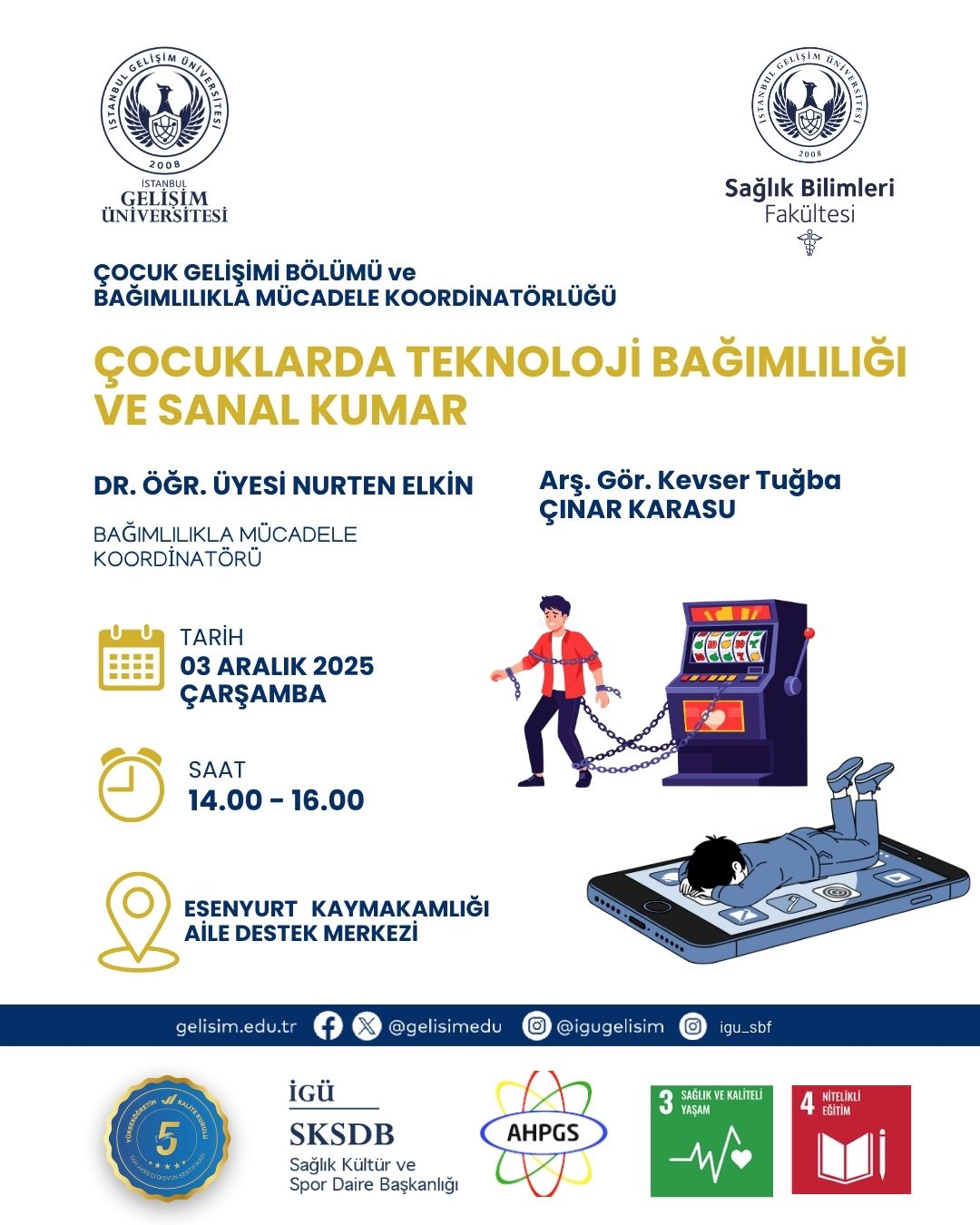
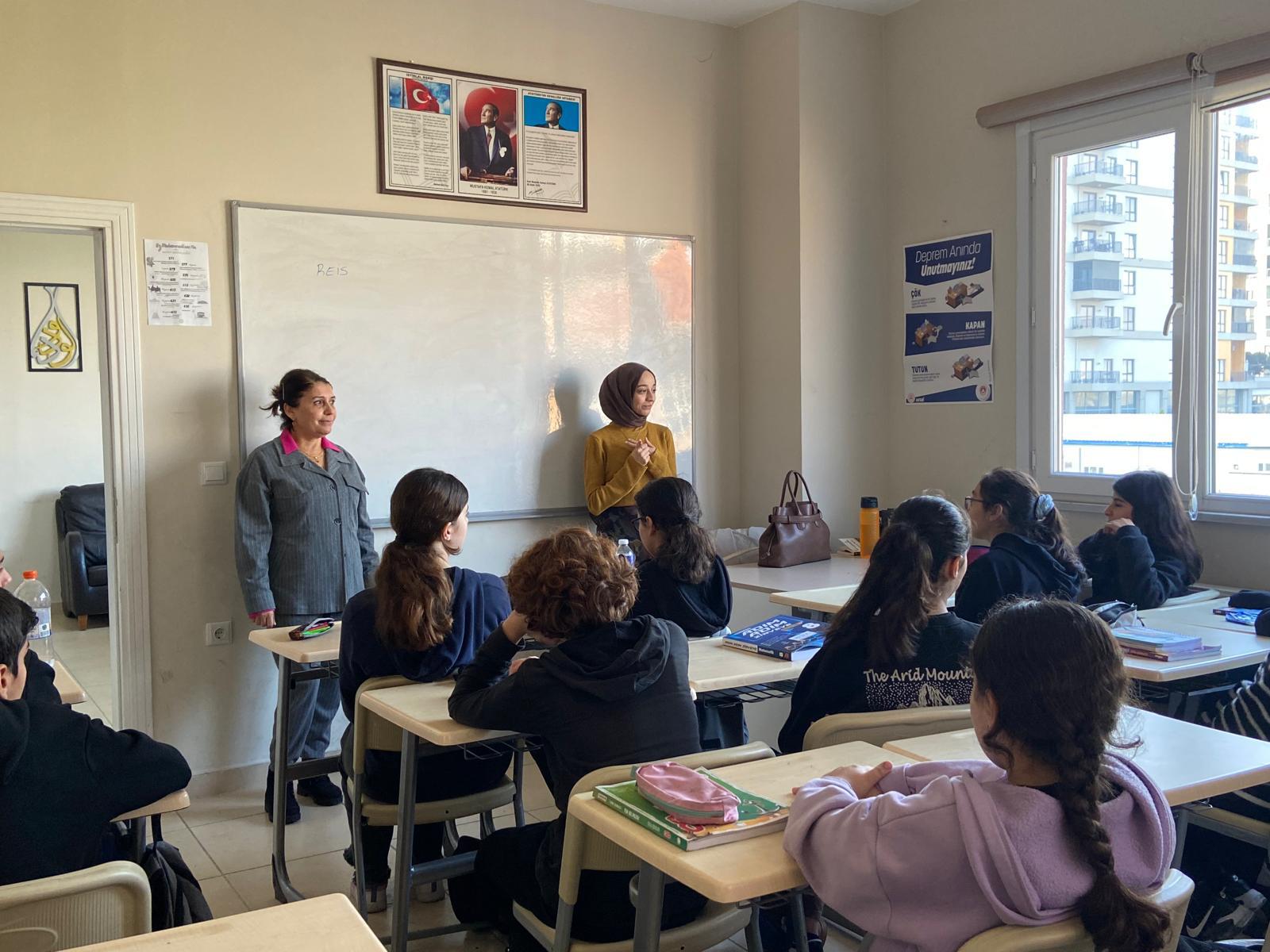
In the opening speech, Dr. Nurten Elkin, Head of the Department of Child Development and Coordinator of the Addiction Prevention Unit, began by introducing herself. She then talked about the projects, training programs, and awareness activities carried out within the university and in cooperation with various institutions under the coordination unit. Emphasizing that technology has become an inseparable part of daily life, she stated that the age at which children access digital devices is decreasing. Dr. Elkin noted that screen time has increased significantly, especially after the pandemic, and that this increase has affected children’s social, emotional, and academic development.
Highlighting that technology addiction does not simply mean spending long hours on a phone, Dr. Elkin stated:
“Addiction shows itself when a child wants to stop using the screen but cannot, experiences intense anger, restlessness, or anxiety when the device is taken away, and shows impairment in daily functioning. Today, many children are becoming dependent on the guidance of the digital world without even realizing it.”
In the second part of the seminar, Research Assistant Kevser Tuğba Çınar Karasu gave a detailed presentation on the effects of technology use on the brain and behavior, based on children’s developmental characteristics. She explained that when used appropriately, technology can support learning, creativity, and problem-solving skills; however, uncontrolled use shortens attention span, makes emotional regulation more difficult, and disrupts sleep patterns.
Emphasizing that adolescence is a critical period in terms of vulnerability to addiction, Çınar Karasu stated:
“The dopamine system is very active in the adolescent brain. For this reason, social media likes, in-game rewards, or elements of chance can create a strong sense of pleasure in young people. At the same time, since the prefrontal cortex—the brain region responsible for self-control—is not fully developed, adolescents may be more easily drawn to exciting stimuli.”
The seminar concluded with a question-and-answer session and the presentation of practical recommendations to families on how to help children navigate the digital world more safely. Istanbul Gelişim University stated that it aims to continue organizing such informative activities that support public health and children’s development.