.jpg)
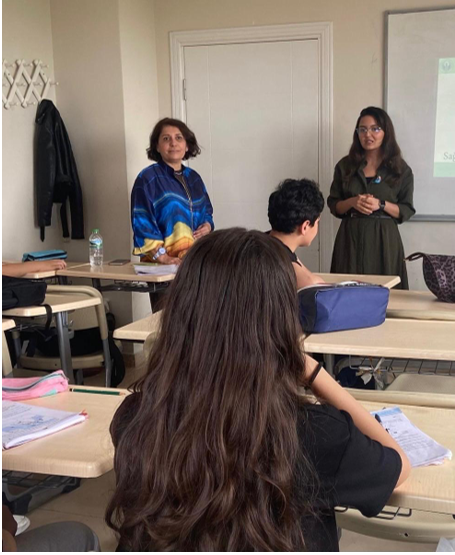
Assoc. Prof. Dr. Nurten ELKIN, Head of the Department of Child Development and Coordinator of the IGU Addiction Prevention Coordination Office, delivered the opening speech by first introducing herself and then providing information about the social contribution projects carried out within the university, educational activities conducted within the scope of addiction prevention, and projects supporting the healthy development of children. ELKIN emphasized that children are increasingly becoming disconnected from nature and spending more time in front of screens, stating that contact with nature is important for children’s physical, social, and emotional development.
In the continuation of the seminar, Research Assistant Hatice Zelal BINGOL stated that the relationship children and adolescents establish with nature is important not only in terms of environmental awareness but also for mental health, emotional regulation, and creativity. BINGOL drew attention to brain development during adolescence and explained that the adolescent brain is highly open to intense stimulation, whereas nature offers a natural space of well-being that supports attention regulation, reduces anxiety levels, and strengthens psychological resilience in young people.
In her speech, BINGOL also addressed the concept of sustainability and the importance of respect for nature, emphasizing that individuals should view nature not merely as a resource to be consumed but as a system that sustains life itself. She also discussed the biomimicry approach and provided examples of designs inspired by nature. BINGOL stated that the millions of years of adaptation processes observed in living organisms have inspired architecture, engineering, technology, and everyday life designs, and noted that students could improve their creative thinking skills by observing nature.
Throughout the seminar, an interactive communication environment was established with the students, and discussions were held regarding their experiences with nature, thoughts about the environment, and daily life habits. The program concluded with the answering of students’ questions and the sharing of suggestions to help them establish a stronger connection with nature.